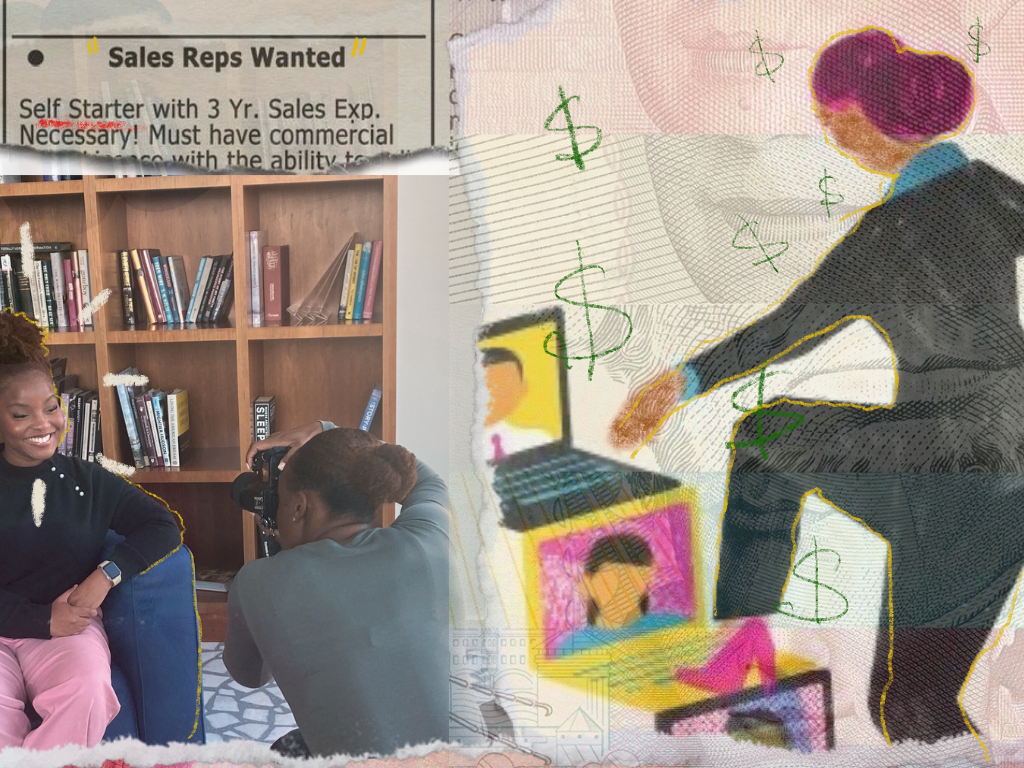
Last year this time, I was four months out of college, and unfashionably unemployed. Despite being burnt out by my senior year, I was set on having an uninterrupted transition from school to a glamorous entry-level media job.
In my last two years at Howard, my creative and professional confidence skyrocketed, and I didn’t want to lose any of that momentum. In my mind, the next logical step had to be moving to a bigger city – Los Angeles, New York, maybe Atlanta – to learn from and work with the titans of the industry. Duh.
That was my plan, and that was that. It absolutely had to work out that way, because it was the only path I was planning for. But after months of ghosted applications and unsuccessful interviews, I was running out of patience.
By November, I was desperate. Four months with no prospects was worrisome, but six? I couldn’t quirkily joke around with the number six. I started aiming for anything remotely related to my communications degree. I even fell for scams.
All of my qualifications, talents and experience began to wither in my eyes. I began to wonder if I had been miscalculating my potential. No pick-me girl: but why did no one seem to want me? Was my resume that much of an eyesore? Was what I have to offer that valueless?
Falling into the merit-for-validation pipeline is a common outcome for young adults, but when our merit starts to equate to our income, its psychological consequences become even more apparent. Last year this time, my defeated spirit was a reflection of the precariously designed nature of work – and how it holds our self-image hostage.
the precariat
An ever-present dread of professional instability isn’t unique to fresh college graduates. In fact, studies show that 61% of adults up to age 35 report job security ( + its effect on finances) as their top concern. The effects of being professionally volatile are far reaching, risking long term damage to relationships, self esteem, and health.
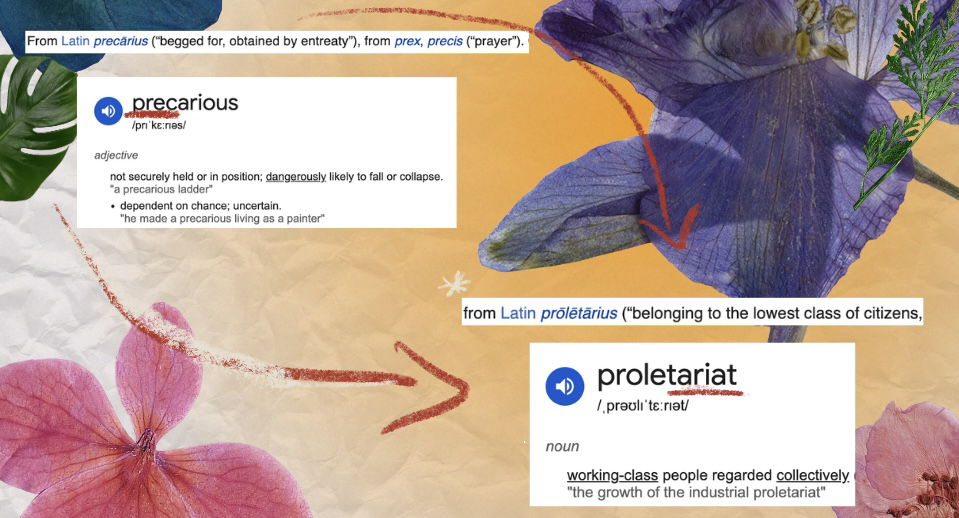
The term precariat describes the wide gamut of people chronically affected by job insecurity – and the subsequent psychological harm it causes. Coined by Guy Standing in 2014, it’s considered a “class-in-the-making”, including people whose livelihoods are the mercy of fluctuations in income and security. This concept is unique, as it can apply to individuals from various ages, backgrounds, industries:
- job seekers (stuck in a cycle of applying and interviewing, to no avail)
- temp/part-time employees
- unpaid interns
- migrants
- freelancers/contract workers
- unsponsored athletes
- literally anyone who performs in hopes of notice/promotion by their securely-employed superiors
The common thread is a lack of long term control over one’s financial stability, social mobility and future outcomes.
money, merit and the mind
Precarious was a fitting descriptor for my circumstances. I was constantly living on edge – if living at all. A crippling shame followed me around, and I watched my confidence in my value shrivel. At that point, just the act of bookmarking another Workday application felt like a humiliation ritual. A lack of income caged me in further – I couldn’t even get brunch (as one does in Washington, D.C.) or buy a candle (as I frequently do) to distract me from my disgrace.
I wish I could say that all made me stronger, but I’d be disingenuous to gloss over how much it sledgehammered my self image. I suffered from a repressive amnesia of sorts – the outspoken, assertive and open person I worked to become faded into a jaded memory.
I felt defeated, hopeless and worthless – until the day I finally got an offer letter.
oh, that’s not-
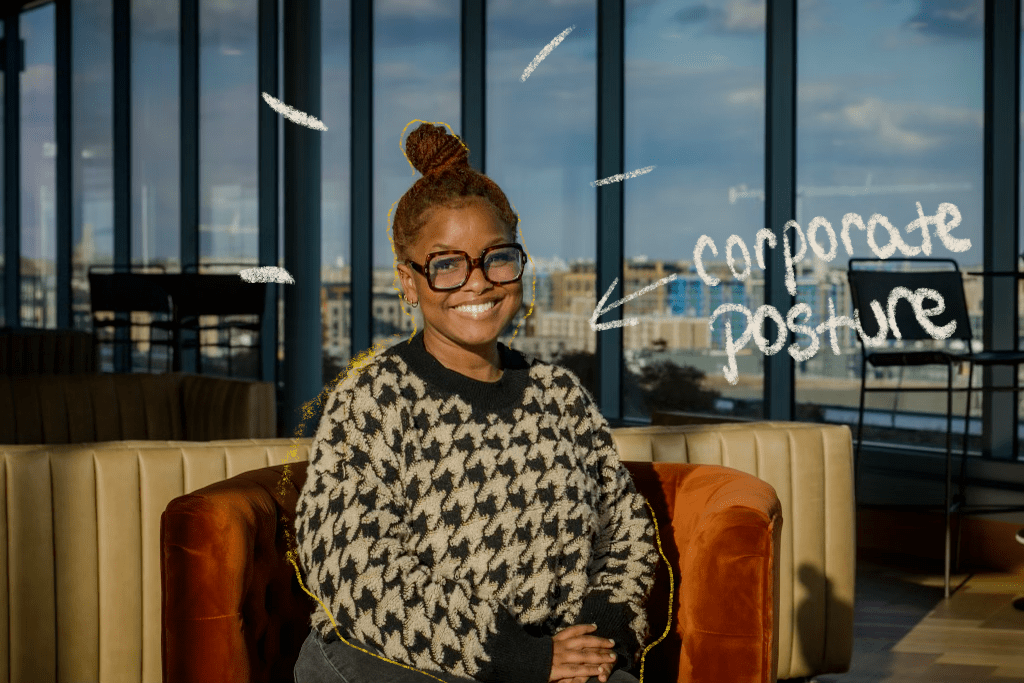
Thanks to the referral of a benevolent friend, I landed my first corporate job. Finally, I felt like a person again. I relished in the buzz of setting an early alarm, getting ready, and traveling into the city – 2+ hour commute in November weather be damned.
The Sunday of my second week of work, I was planning my tasks and projects. I remember feeling concerned about how much it all felt, – so much so that my head started to hurt. Then it started to throb. Then, for a split second, one side of my face felt frozen – suffocated, even.
I thought I was having a stroke. I was terrified. It wasn’t my first time experiencing scary bodily sensations, but this was the scariest of all. I had spent months gritting my teeth, popping muscle relaxers, and hiding my rapidly decreasing ability to walk normally, with the hopes of figuring it out when I settled into a job – so I could pay for healthcare at all.
Then, two weeks into said job, I discovered that I had been living with a large, rare spinal cord tumor. I neva see sitn go so yet. One girl coulda so salt?
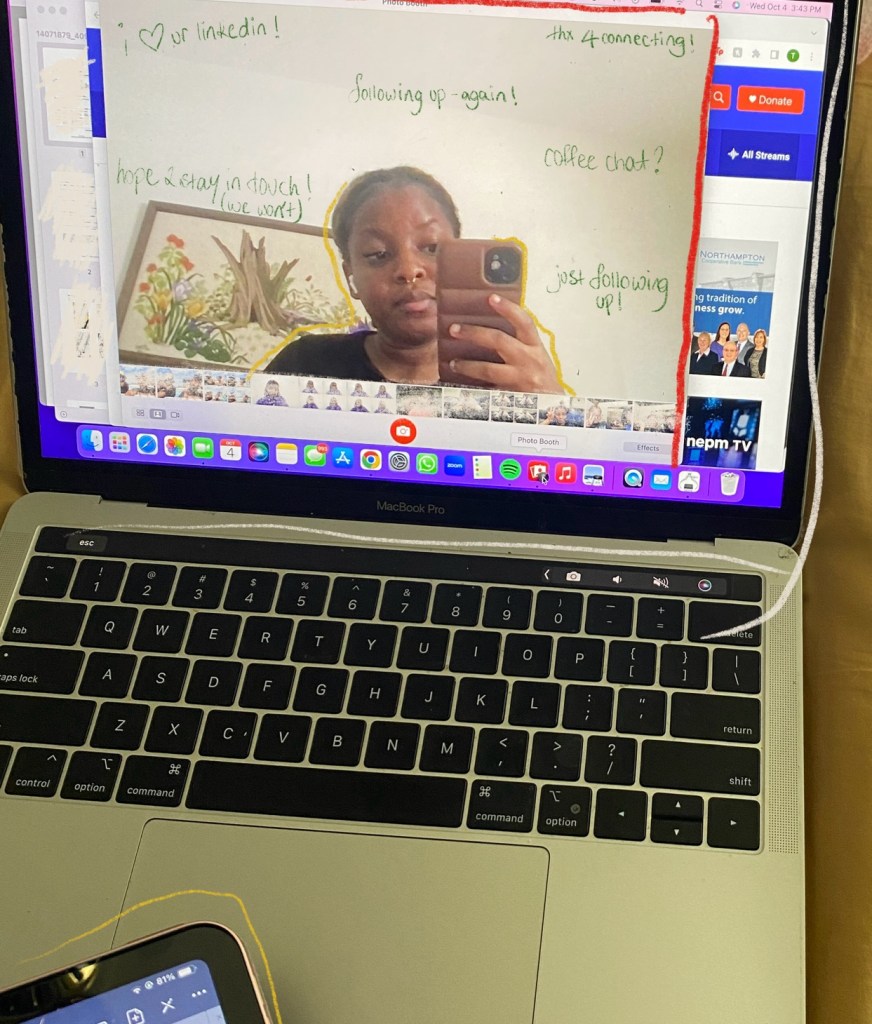
What was it all for? What value did the coffee chats, the cover letters, or the pandering have, if my life as I know it is on the line?
the theory of evolution
Reader, I would never wish such a weight on my worst enemy. Learning that you’re ill is like a hollow punch to the gut, but hearing that it could also be life-threatening feels like being plunged underwater.
Each day since my diagnosis has been an active fight – for resilience, for courage, for the belief that the rest of my life is worth fighting for.

I chose to evolve in order to survive. In doing so, I began unraveling my self-image from achievement. I retaught myself that the things that made me unique still existed without the validation of a hiring manager. I exist beyond my employability. My talents, skills and passions are mine to celebrate and share.
I surrendered to the sobering truth: the pursuit of social mobility would not save me. My achievements, no matter how grand, aren’t the memories I cling to when the current gets rougher.
In my most desolate moments, the things and people I love are the reminders of why I want to live. Clinging to those memories gives me the extra push to persevere for a life fully lived on my terms.
what a girl wants
A precarious life – one lived in chronic wait for the other shoe to drop – is not the one I want for myself.
Since becoming disabled, my view of work has (unsurprisingly) changed. Much of my life now requires flexibility, as well as a deference to now put my health and comfort first. I desire working environments that are intentional about accommodating those needs – not only on paper, but in practice.
I think it’s a privilege, and far from the norm, to have a job that provides a holistic sense of alignment and satisfaction. The ever-rising cost of living doesn’t allow us to wait for the perfect job to fall into our laps. Luckily for us, we can accept what we currently have and still commit to pursuing the lifestyle we desire.
Accepting my new reality pushed me to be steadfast in pursuing what I really want my life to feel like.
For now, I’m slowing down and letting myself figure out what that is. 🌺




 TREVONAE.com
Leave a comment