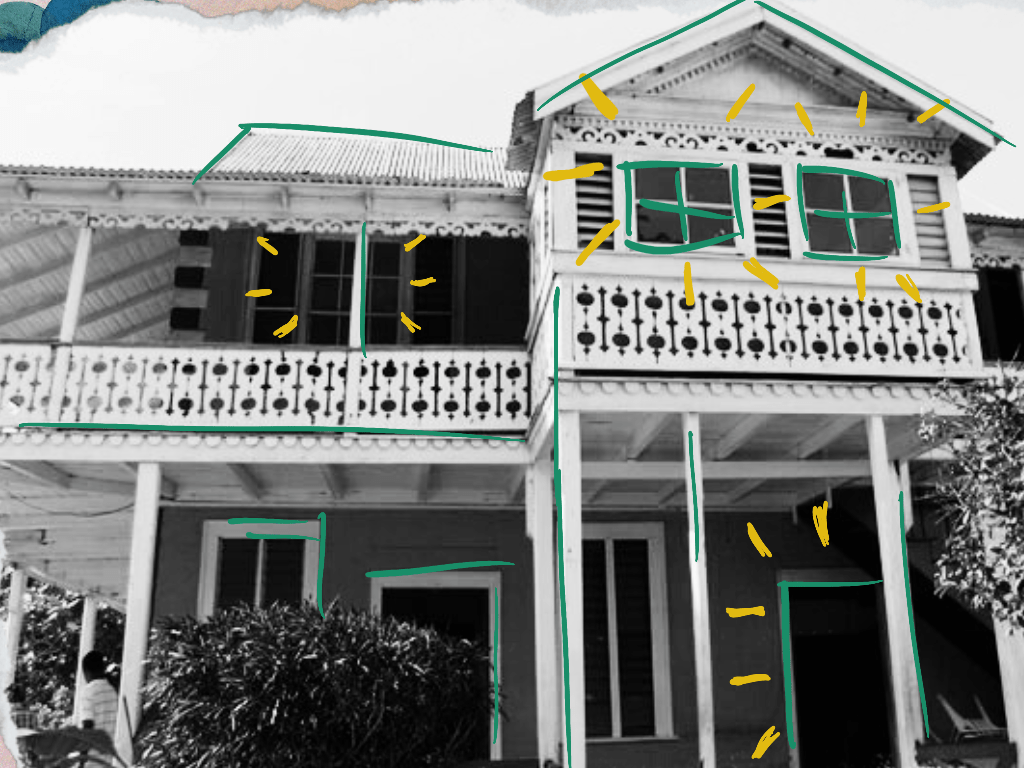
In 1892, the Waterloo Great House in Black River, St. Elizabeth became the first place in Jamaica to use electric power. The seaport town brought prosperity to the parish, and was once one of the busiest and wealthiest on the island, second only to the capital city of Kingston. In the 1970s, however, heavy government investment in the parish’s farmers shifted the wealth of the parish to a robust agriculture industry, producing at least 22% of the country’s food needs.
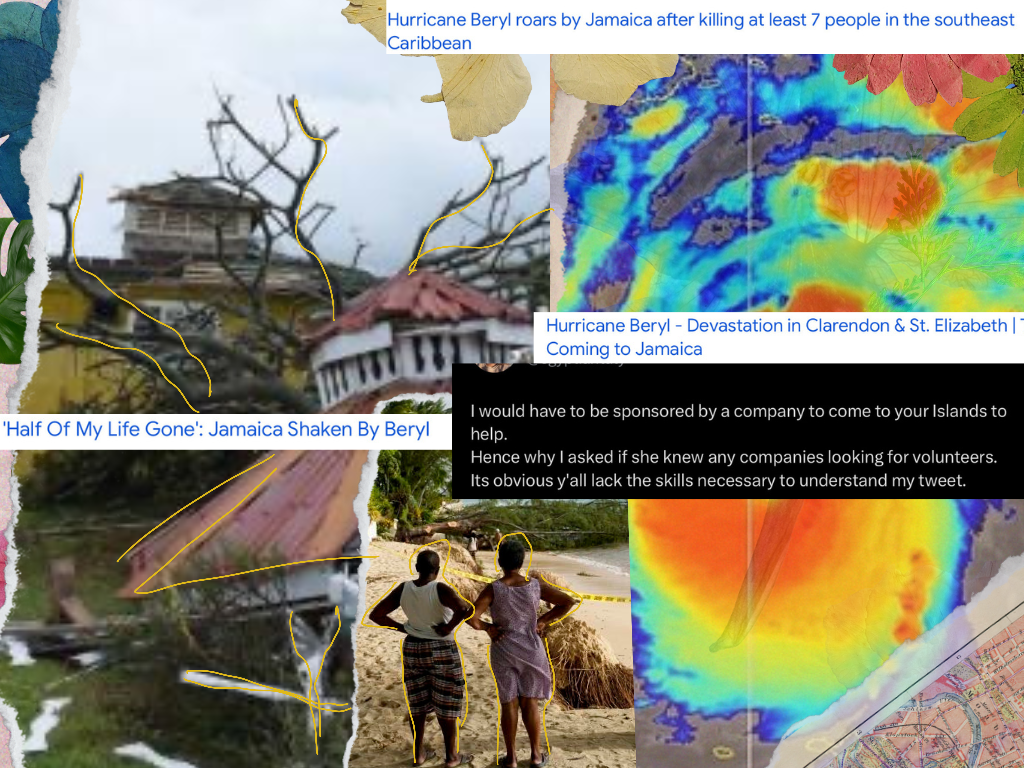
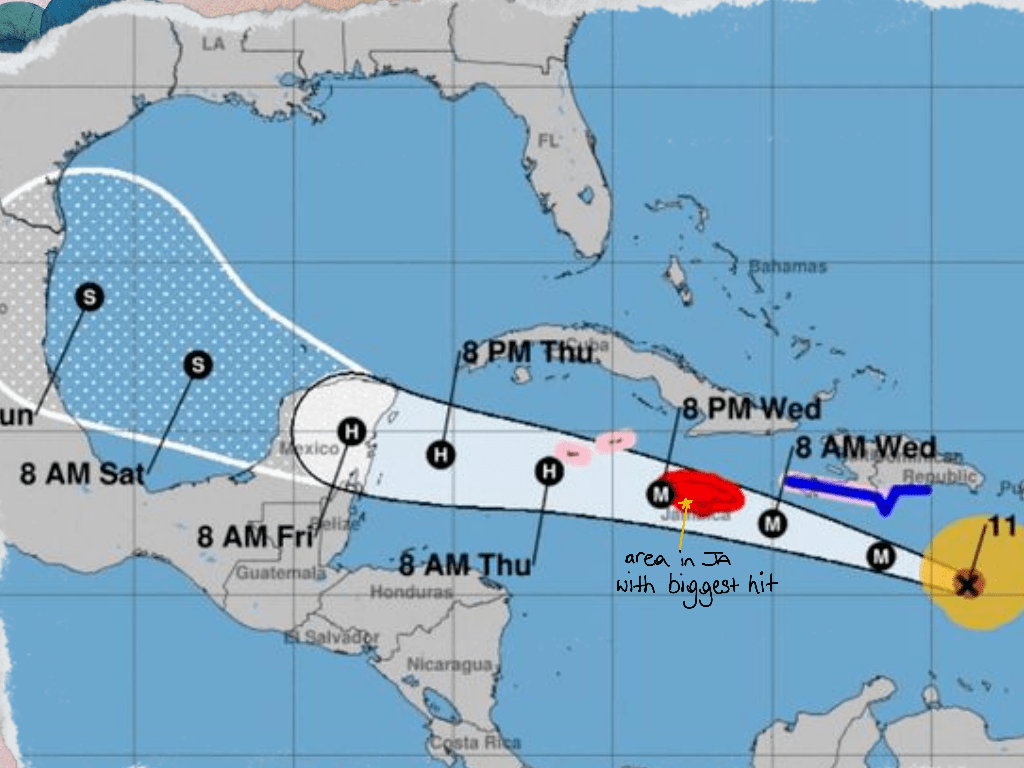
In a harsh contrast, last week, I got pictures from my mother of catastrophic damage to family property in southern St. Elizabeth. Farms were flattened, roofs were gone, and cell towers were bent in half. In the wake of a record-breaking Hurricane Beryl, I was only able to get her messages a day after the fact, because power lines in the community had toppled en masse. Some residents estimate that consistent electricity may not return to the parish for six months.
The productivity of arguably the island’s most productive parish is projected to be affected for at least 6 months. Output aside, the lives of thousands of residents have been upended, paused or completely destroyed. Yet, in more urban pockets of the island, life has relatively gone back to normal, with residents expressing gratitude that “the country was spared from the worst.”
This dichotomy brings pause, and reflects a dynamic present in policy, action and thought – those with the ability to turn away from destruction and those who don’t have a choice but to stay.
leveling the playing field
On the surface, natural disaster is one of the only characteristics of humanity that’s unavoidable across social lines. However, perception of and preparedness for disasters tends to mirror the environment they occur in.
In other words, social markers like income and class directly influence one’s bandwidth to bounce back from tragedy.
Enter the concept of the social disaster: in this context, inequalities occurring in the human-made landscape that destruction occurs. As a result, natural disaster (and subsequent relief) is made a priority only as designated by the ruling classes and those invested in retaining their power.
Studies by environmental anthropologists show that in the wake of major disasters, the quality of attention (and aid) given to residents skews towards the priorities of the bourgeoisie. In many ways, tragedy for marginalized communities = opportunity for the powerful.
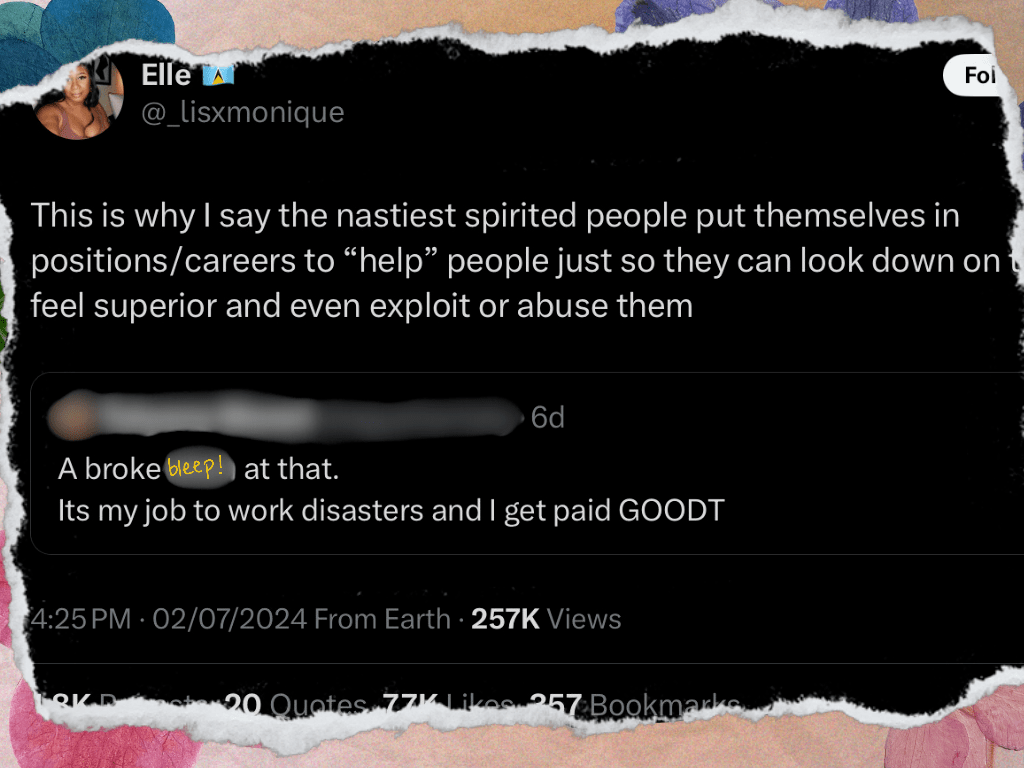
From a socioeconomic POV, there are opportunities to promote their brand, market their candidacies, or exploit their workers. From a layman’s POV, there are opportunities to flex your savior complex by offering conditional help to vulnerable communities. “I’ll hammer a couple walls if you give me an all expenses paid trip to your country (at a beachside resort)” type beat, if you will.
This is merely the first stage of a top-down process: the concerns of the powerful influence policy. Policy directs where money flows. Money makes media. Media makes the mind.
Instead of leveling the playing field, disasters show the pre-existing imbalances in our world.
To think – despite everything else toppling down, an oppressive social status quo still stands strong. Inequality is so deeply threaded in the fabric of our society that even the strongest winds couldn’t untwine it.
Power lines may have fallen, but the rigid lines of power in society are still sturdy as ever.
decentering power
Interrogating where you stand on society’s power grid can create uncomfortable revelations. Even the most liberal of the proletariat has perpetuated the agenda of the ruling class to their own people. We judge our neighbors for being too combative, too disruptive, too radical, or too honest. We scoff at the troublemakers because they make too much noise, even though the commotion serves to wake us up to our exploitation.
So, yes – the self-audit is uncomfortable, but it is necessary to identify where we may have sustained social apathy at the expense of our fellow citizens.
The spirit of collectivism is the strongest threat to an oppressive status quo.
To be a collectivist means to choose empathy first – everytime, no matter what.
To be a collectivist is to value community over commerce.
redefining power
It’s no fault of ours that we were christened into a dog-eat-dog society, where to succeed means to undermine your neighbor. However, it is undoubtedly our responsibility to resist the pull of the exploited-to-exploiter pipeline. To be brave enough to even consider resistance is, in my eyes, the real sign of power.
In the same way that sharing moments with those closest to you brings you joy, sharing strength and empathy with your fellow person brings fulfillment in indescribable ways. The exponential growth of goodwill is what creates habits, actions and movements that will make the world of your descendants a better place than the one you’ll leave behind.
I challenge you, reader, to choose resistance today.
If not for yourself, for the people you’ve seen experience catastrophic damage, loss and pain.
It’s a privilege to be able to say that you have never faced a problem, but it is a misappropriation of said privilege to tuck away the power that comes with it. Your privilege, reader, comes with a responsibility to redistribute it in whatever way you can.
how to support the caribbean
Leave your foreign exceptionalism at the door. Altruism isn’t real unless it’s unconditional. We nuh want no slapdash “help.” Cheers!
How to donate
These will be updated periodically. Please feel free to contact me with additional resources.
Jamaica
- Manchester and St. Elizabeth donation drive
- Help Rebuild St. Elizabeth, Jamaica
- Hampton School Restoration Fund
- Munro College Donation Page
Saint Vincent and The Grenadines
Grenada




 TREVONAE.com
Leave a reply to dizhanabi Cancel reply