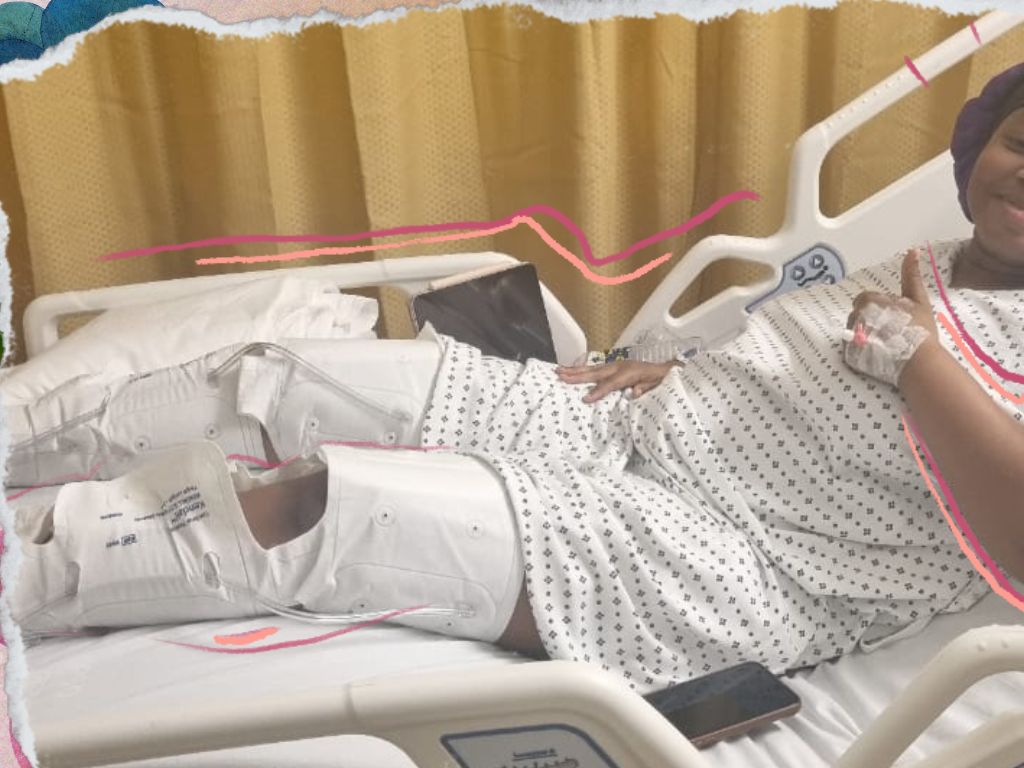
I couldn’t move. My body was on fire, and yet, I couldn’t feel anything. All I could do was scream, and pray for it to be over.
an unexpected discovery
On a hot Montego Bay afternoon, I smiled tersely at the young customs officer reviewing my travel documents. Satisfied, he stamped my passport and slid it under his window towards me.
“Welcome home,” he said. I smiled, but did not respond.
Usually, hearing those words filled me with comfort and pride. This time, knowing that this trip to Jamaica was unplanned and for sordid purposes, comfort eluded me, and would continue to do so more than I could ever imagine.
One month and three MRIs later, I woke up to the harsh lighting of a post-operation observation room. I looked up at the nurse rolling me back to the hospital room I checked into 20 hours prior.
“Okay, time to swing over,” she said, motioning to the bed. I shifted my hips, but nothing happened. I was flustered. “Miss Williams, you need to move if you want to get on the bed.” I snapped. It was 1 AM, I was groggy from anesthesia, and shaken up from a 6 hour surgery that started 12 hours later than it was scheduled.
“Miss, I’m coming out of spinal cord surgery,” I grumbled. “I cannot move.” Her face softened, and she motioned to an attendant for help. As they carefully lifted me on to the bed, I looked up at the pale ceiling thinking that at the least, I had made it through the worst part of this ordeal.
I have come to know that while I made it through surgery, I had a new personal hell waiting for me on the other side.
Days later, I celebrated my 24th birthday with some exercise: which, at that point, was standing (with a walker) and shuffling around the verandah for a few minutes.
This pushed the limits of what my body could do. Two days prior, I was discharged from a week-long hospital stint, after recovering from a laminectomy – an attempt at removing the intramedullary spinal cord tumor I was diagnosed with 3 weeks prior.
spinal tumors: types and symptoms
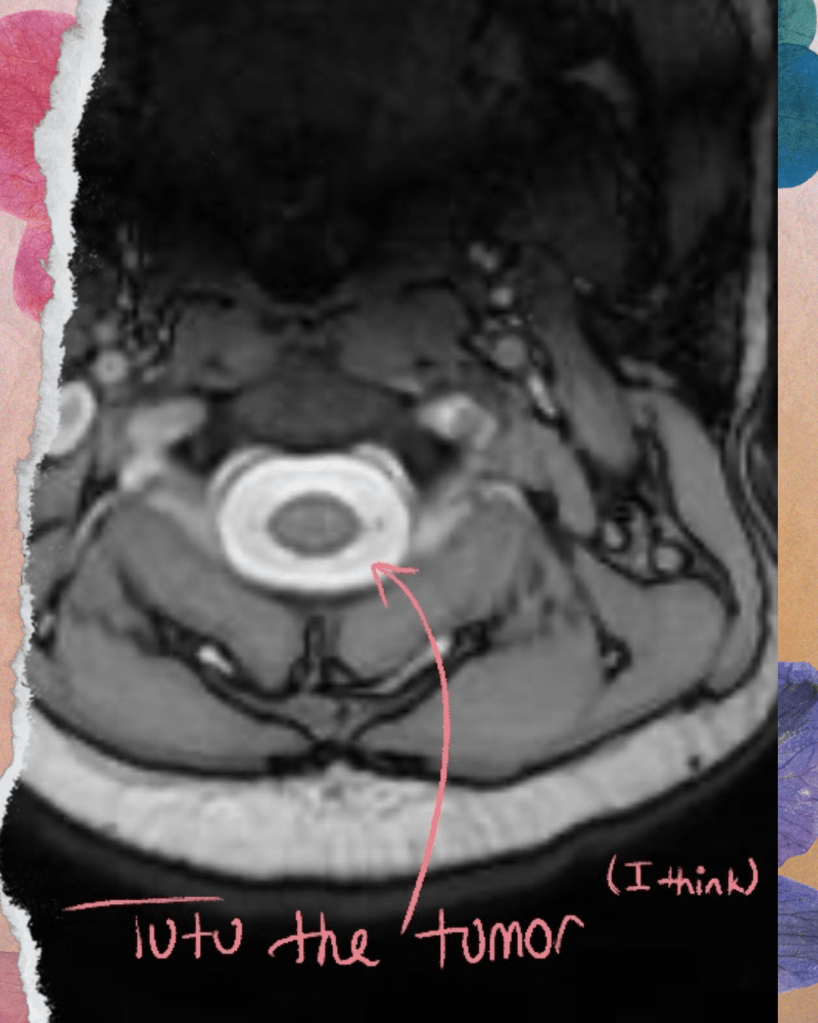
Spinal cord tumors are rare, counting for less than 20% of lesions related to the central nervous system. Mine is a ganglioglioma, and is even rarer: making up just 1-2% of brain or spinal tumors in children and young adults. Symptoms typically include:
- weakness on one side of the body
- difficulty walking
- loss of sensation: instead of your body part falling asleep, it’s in a coma
For me, it also looks like:
- painful muscle spasms
- horrible back pain
- constant fatigue – weak muscles + limited sense of feeling = exhaustion after standing/walking for more than a couple minutes
This pesky mass (who I named Tutu The Tumor) compresses the nerves controlling my lower limbs, effectively blocking the exchange of signals from my brain to my legs.
Neurologists explained that due to its delicate location, the tumor could gradually paralyze me if left untreated.
However, this also meant that something going even remotely awry during surgery could also render me fully paralyzed.
I spent the latter half of 2023 with my left leg gradually fading to near obscurity, and the right leg preparing to follow suit.
I didn’t know it then, but I was losing proprioception – my body’s ability to sense its own movements, actions or location. It’s a sixth sense that’s easy to take for granted, because you don’t know that there’s something controlling all of your coordination until you lose that control.
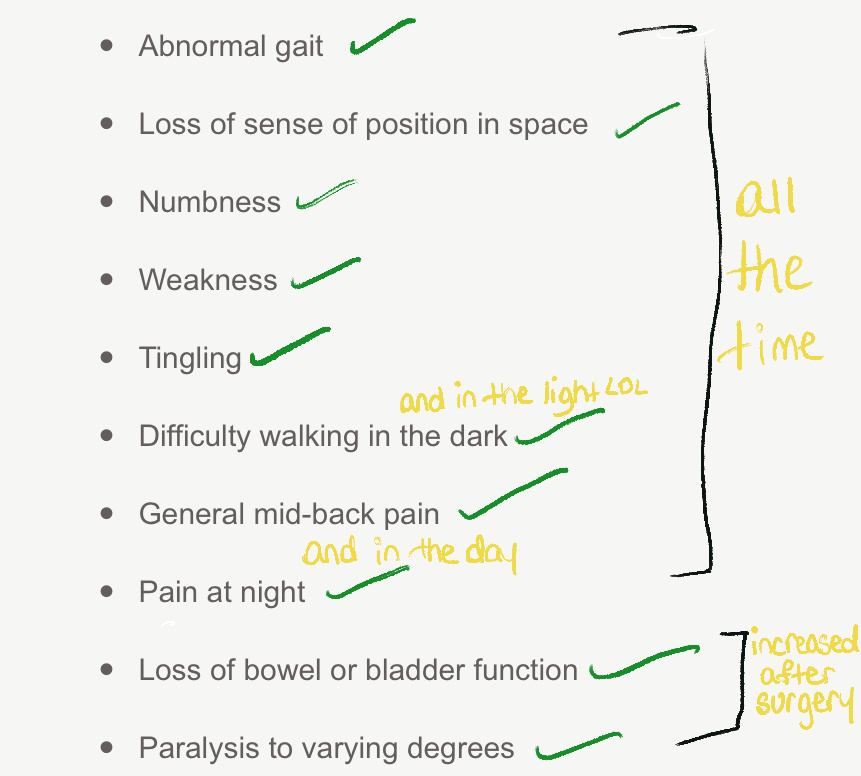
A week post-op, I was in a confusing purgatory in the middle of that spectrum: not totally paralyzed, yet somehow way worse than I was before. The tumor’s volatile location led the surgeons to remove only a tiny bit to avoid damaging anymore critical nerves.
Consequently, not only did I still have a tumor – it was now very mad at me, and my pre-surgery symptoms worsened with a vengeance. The gradient numbness in my left leg was reduced to complete nothingness. At 24, I essentially had to learn how to walk again.
adjusting to a new reality
The future I envisioned for myself didn’t account for the possibility of me only being able to move around with a walker (then a cane), or being so depressed and embarrassed that I exiled myself from everyone I knew.
I indulged in isolation, because facing the outside world meant seeing proof that despite me being in a personal hell, the rest of the world was still spinning without me.
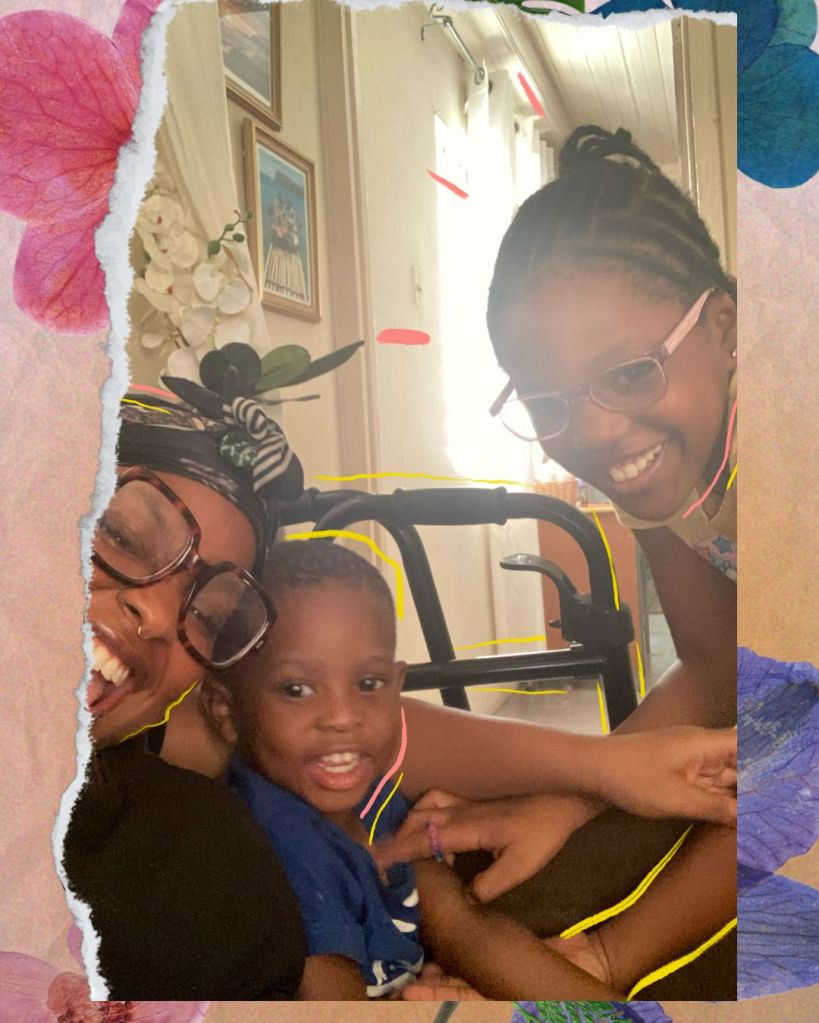
The rarity of this condition makes it hard to explain to others, because it’s likely that they’ve never experienced anything comparable.
After surgery, once simple tasks like wearing shoes, sitting upright, and even using the bathroom became complicated and oftentimes painful activities that I couldn’t do independently. My back, legs or feet sometimes begin to randomly spasm, oftentimes coming with crippling pinching sensations that increase in intensity.
The worst, however, was sleeping after surgery: several nights, I’d be awakened by the nerves in my feet activating, sending increasingly harsh tingles through my legs until my entire body was convulsing involuntarily.
These convulsions felt like each nerve in my body was doused in gasoline, then exposed to a flickering flame. My body was on fire, and yet, I couldn’t feel anything. All I could do was scream, and pray for it to be over.
With a slew of new limitations, I was forced to admit to myself that I selfishly didn’t notice the extent of society’s inaccessibility until I became disabled myself.
Suddenly, it was like I became an unaccounted for member of society – invisible, discarded, and not taken seriously. Coping with that reality seemed an insurmountable task, and sent me to a new kind of low.
At 24, I reached rock bottom. Luckily, getting to that point usually means that a bounce back is on the horizon. Armed with weak confidence but great hope, I decided to challenge these new limitations, and reframe this hurdle as a chance to exercise self compassion.
embracing change
My therapist has encouraged me to consider that my body is probably petrified too. After all, she’s watching powerlessly as a parasite affects her ability to guide me. Yet, despite these horrors, she continues to look out for me. When I feel fatigued, she’s telling me that I deserve rest.
When my muscles seize, she’s showing me that I can withstand adversity. When my walking is unsteady, she’s reminding to give thanks that I’m strong enough to try anyway. Despite my physical and mental scars, I am still malleable and still worthy of being seen.
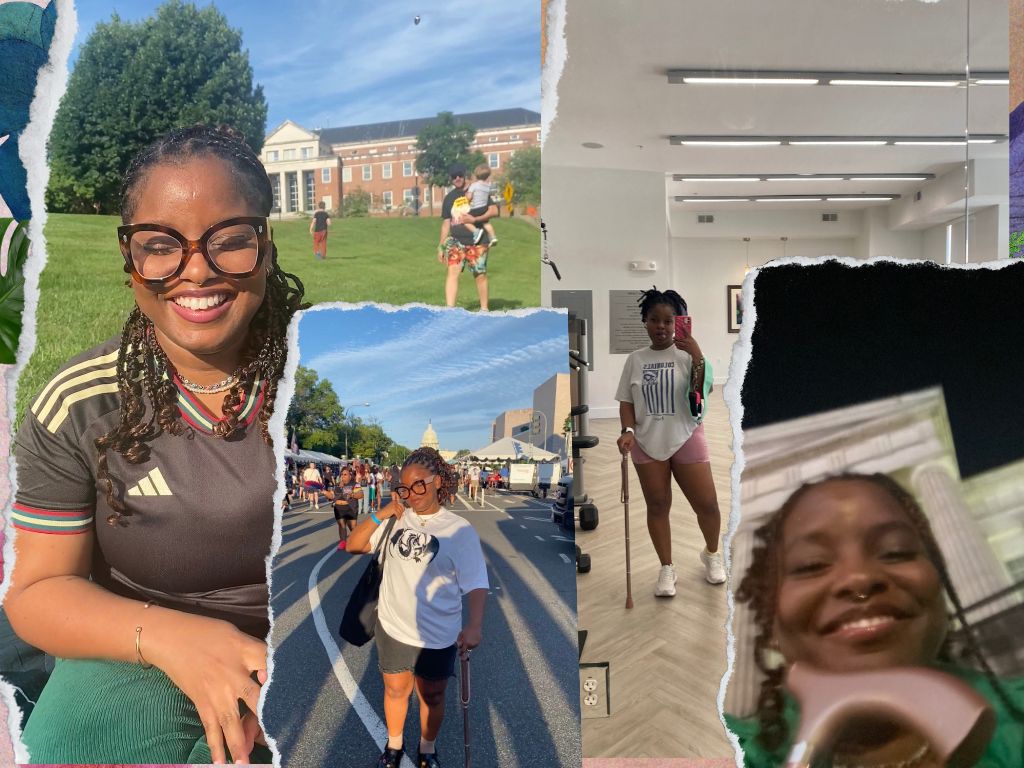
So, this blog is a love letter to myself – a reminder that I can hold space for grieving who I was before, while also celebrating who I am today.
I can be scared yet brave, nervous then bold, jaded and still optimistic about the beautiful life that lies ahead for me.
Struggle, reader, is a fate that absolves none of us. It might have a different name, a different reason, or a different outcome, but it is proof that despite our best efforts, we’ll never have full control of our lives. After humbly accepting this truth, the next step lies in opening up about our hardships to ourselves and to each other. Affirm your grief, confusion and pain, then allow the next person to be inspired by your bravery.
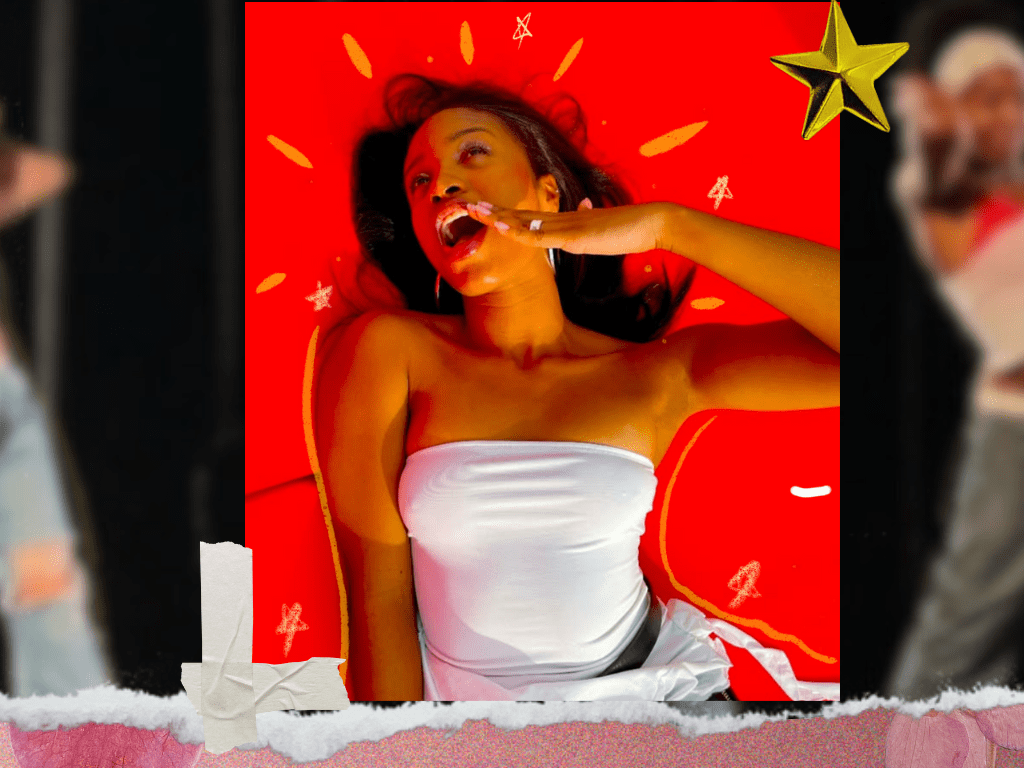
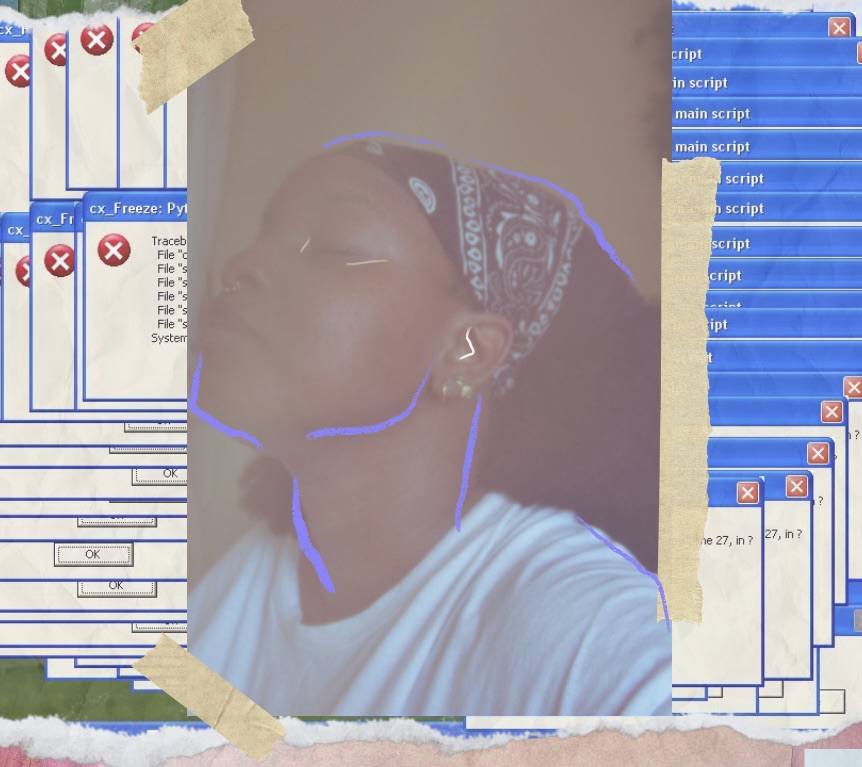
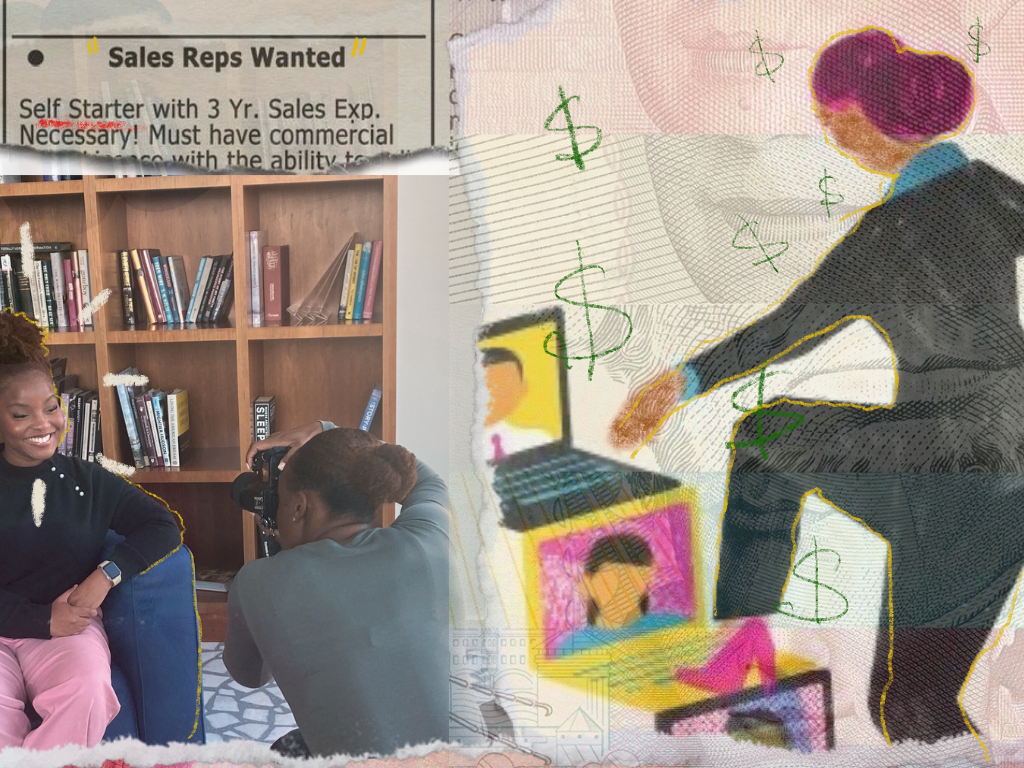
As this journey continues, I’m writing to validate the nuance in my thoughts, opinions and emotions. More importantly, I’m writing with the hope that my vulnerability gives you the courage to welcome yours with open arms.




 TREVONAE.com
Leave a reply to Karlene Cancel reply