“So, do you understand why you’re doing this?”
I paused. Why are we quizzing me?
No – this conversation wasn’t taking place at work. Nor was this at school, or in an ill-fated relationship on the verge of ending. I was at a hospital, waiting to be given instructions for my upcoming spinal surgery. You know – what time to get there, what I shouldn’t pack (not my medication), whether I could keep my lash extensions on or not (I couldn’t.)
“Because I have…an astrocytoma?” I answered. I don’t know why I used a questioning tone – I knew what I was talking about. As per my MRI report (at the time), that was likely the type of tumor I had.
“Who told you that?” he retorted, raising an eyebrow. Again, why are we quizzing me? Furthermore, who is he talking to?
We stared at each other. I felt a familiar rage brewing inside me, one fueled by the sting of being patronized. It’s a feeling I’ve felt in the workplace, the classroom, and in relationships. But to feel it in the hospital – the place where I was arguably at my most vulnerable – was demeaning.
I didn’t understand it then, but these feelings of shame and anxiety around doctors wasn’t just a me thing. Not only were my emotions justified, they also reflected a much larger sociocultural issue.
it’s a real phobia
Nobody really looks forward to seeing the doctor. Visits can be awkward, tedious and definitely scary. In some extremes, this can be called iatrophobia: the fear of doctors, medical care or the medical system.
Growing up, I always heard older folks speak about avoiding the doctor until it was painstakingly necessary, and I never understood how someone could be that reckless with their health. Oh, such naivete.
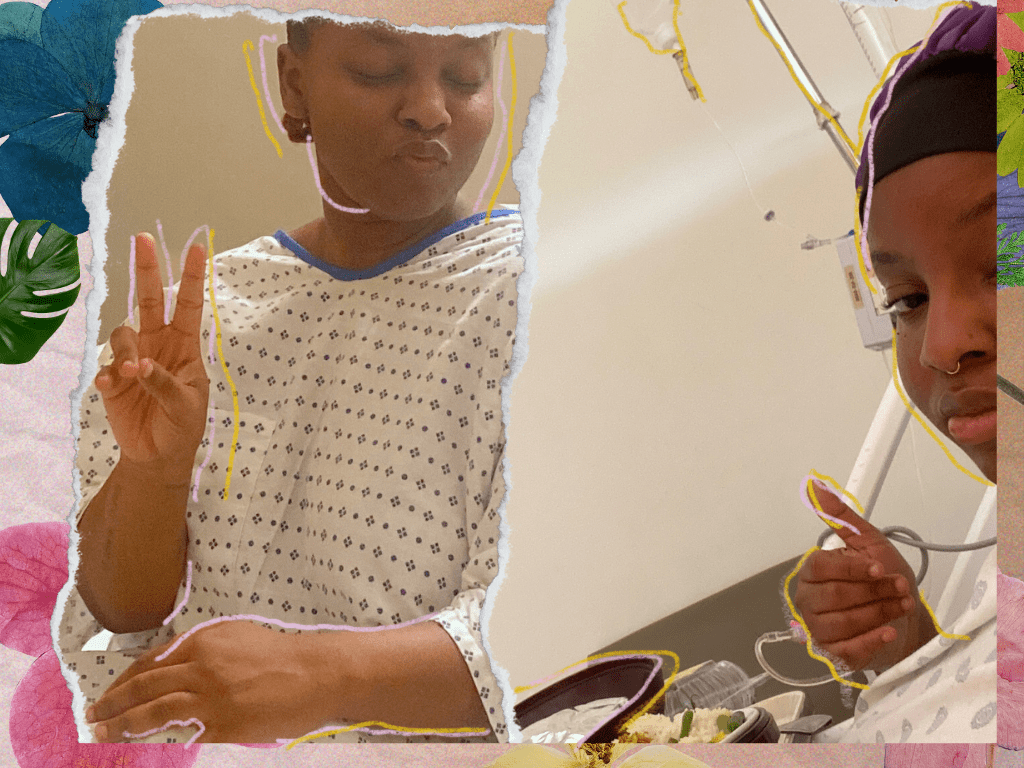
As I got older and doctor’s visits were no longer just routine, I started to notice how I would leave offices feeling more exasperated than I felt when I got there. I realized that the older women in my life weren’t over confident or flippant about their health – they were tired of being condescended. Rather than be spoken over or disregarded, women will suffer in silence.
A 2022 study showed that women visiting emergency rooms for chest pain waited 29% longer to be evaluated than their male counterparts. Additionally, researchers at The University of Pittsburgh concluded that 70% of women of color who “rarely expressed their anger with those closest to them” were more likely to be predisposed to heart attacks.
More studies also show that women make up 80% of people with autoimmune disorders, and are at a much higher risk of suffering from conditions producing depression, PTSD and chronic pain.
Statistically, I was supposed to silently acquiesce to the doctor paying scant regard to my care. So, that’s what I did, reader.
Until I thought I was about to die.
poker face
The day I was discharged from the hospital, it was kind of unplanned. My primary neurosurgeon, Dr. Wilson*, was absent for most of the week, so the rest of the medical team paid me stoic, impersonal and infrequent visits. When I asked detailed questions, they deflected and encouraged me to ask Dr. Wilson instead. When I cracked jokes, they gave me awkward poker faces in return.
That morning, one of the doctors insisted that it’s best I go home. “It won’t do you any good to stay in the bed all day,” I heard. “Aren’t you eager to leave?”
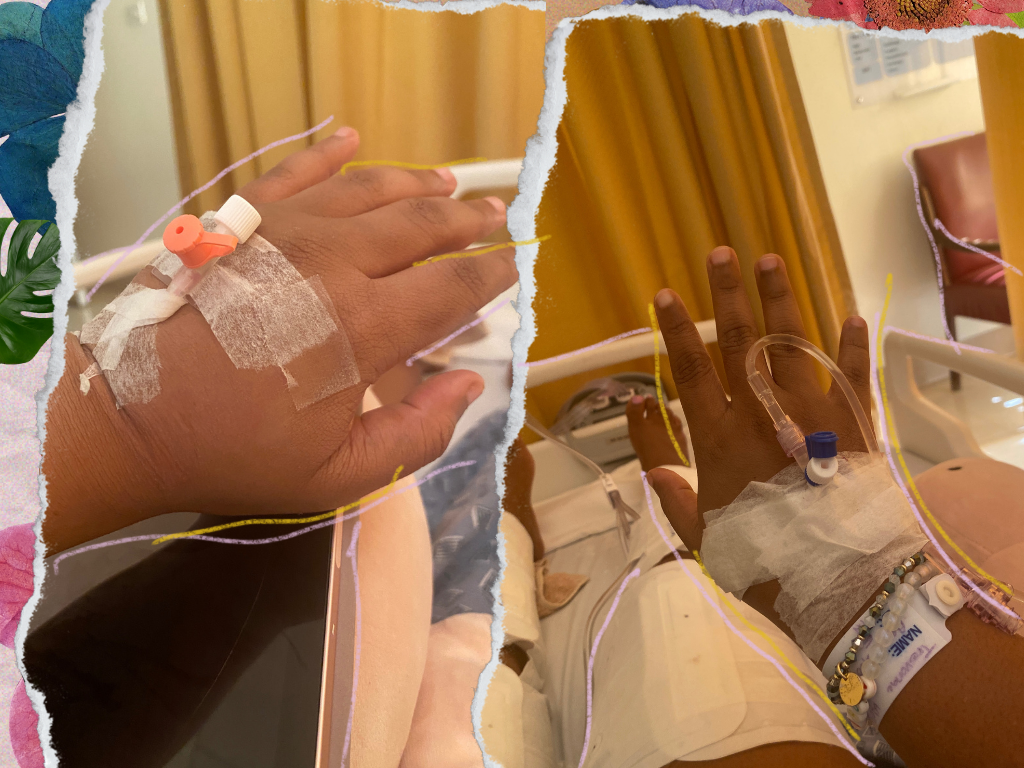
I asked if I was far enough along in recovery to do that – they assured me that I’d already passed the worst humps. I looked at the group of them, uncertain, but accepting that they had the best understanding of the situation. They’d send me home with prescriptions for the new medications I’d started taking – steroids, laxatives, muscle relaxers – and all would be well.
I felt rushed, but I decided I didn’t want to waste anyone’s resources or time.
That night, I experienced my first pseudo-seizure. While my body convulsed, I couldn’t think about much: like I said, I thought I was going to die. I do, however, remember shuddering in my mother’s arms as it ended, and wondering why none of the doctors told me it would be this way.
I wondered why the two women on the medical team mimicked the same stoic stance as their male counterparts. Were they succumbing to the patriarchy-sponsored anti-emotion regime?
Or was I giving them more flack because I was succumbing to the cultural expectation that women should always take on the sympathetic aspects of emotional labor?
divinely ordained
Women and femme non-binary people are sorted into categories of subjugation from the day they are born.
In their book The Great Cosmic Mother, Monica Sjoo and Barbara Mor speak on the assumption throughout history of the “psychic passivity, creative inferiority and the sexual secondariness of women.”
Each of these categories is rooted in powerlessness – a trait painted as innate to us, genetically, naturally and divinely molded to be so. So, we are expected to not ask questions, not shake the table, and not make eye contact. We’re expected to listen, echo and be thankful we’re even being attended to.
As writer and psychologist Maytal Eyal explained, “our culture rewards women for being perpetually pleasant, self-sacrificing, and emotionally in control.” Women them find themselves in a lose-lose situation: damned if they do (ignored or ostracized for speaking up), and damned if they dont (silencing themselves to the detriment of their bodies, minds and spirits.)
the root of the problem
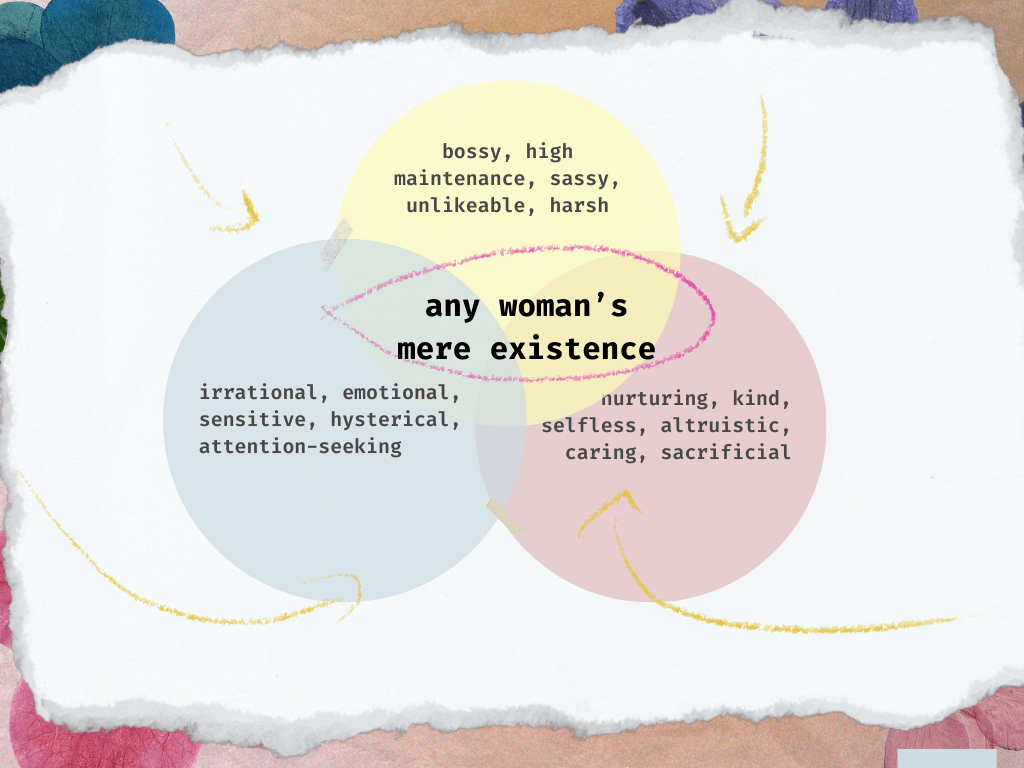
In my Venn diagram of the feminine nature, you’ll find that some of the words are synonymous with weakness. To feel emotional – to express passion or pain – is to lack control. As soon as we begin understanding society’s gender roles, we’re made to believe that a lack of control is the woman’s birthright.
So to resist being associated with powerlessness, we repress our emotions. We shame them, and we shame others who are bold enough to let theirs through.
Well, reader – guess wa? I decided that silence neva fit me.
Four days after I was discharged, I told my doctors what they needed to hear.
Back at the hospital, I defied the statistics, and broke down in tears to the resident overseeing my post surgery check-up. I told him I felt neglected, disappointed and angry. I begged for more communication, for transparency and for support. For consistent care. I explained that I felt like a case study, and not a young woman whose entire mobility spectrum changed overnight.
The resident’s eyes softened. He couldn’t have been more than 4 years older than me – he was young, and seemingly still malleable enough in his profession to actually listen to me.
I told him that they can do better – no, that they should do better. I deserved better.
you deserve better too
Going to the doctor shouldn’t be scary. While it is important that we advocate for ourselves, the onus is not on women to singlehandedly change the systems that are structurally against us.
The work that doctors do is inexplicably difficult and valuable, and for those reasons alone, I meet all of them with grace and the benefit of the doubt. At the same time, as a chronically ill woman, it is harmful for me to put their comfort above my health. Doctors may not owe us a cheery disposition, but they do owe us transparency, openness and attentive care.
None of my emotional expression is negative, being an outspoken woman is not an oxymoron. Emotions and passion do not take away from me. I don’t subscribe to that belief, and you don’t have to either.
Finding the resolve to speak up can’t happen overnight, and may be something we revisit throughout the rest of our lives. But to start means to be better for ourselves than we were before. The same way that we decide what flavors we like and dislike, what we admire and what we abhor, is the same way we should decide what we can live with and what we refuse to condone.
A big chunk of that is believing that we are worth the effort needed to make those decisions in the first place.





 TREVONAE.com
Leave a comment